

In this article
DEFINING THE PLACE OF SPORT IN YOUR LIFETHE PILLARS OF PERFORMANCEPILLAR 1: NUTRITION + MICRONUTRIENTS1. Eating ENOUGH2. Balancing macronutrients3. Meal timing4. Food qualityPILLAR 2: HYDRATIONPILLAR 3: DEFICIENCIES, MEASURING YOUR TERRAINPILLAR 4: BODY MAINTENANCE1. Mobility2. Daily movementIn this article
DEFINING THE PLACE OF SPORT IN YOUR LIFETHE PILLARS OF PERFORMANCEPILLAR 1: NUTRITION + MICRONUTRIENTS1. Eating ENOUGH2. Balancing macronutrients3. Meal timing4. Food qualityPILLAR 2: HYDRATIONPILLAR 3: DEFICIENCIES, MEASURING YOUR TERRAINPILLAR 4: BODY MAINTENANCE1. Mobility2. Daily movement
Athletic Performance: What Defines (or Limits) Your Results
Part 2/2: Optimizing Your Biological Terrain, Actionable LeversMarch 6, 2026In part 1, we identified 3 invisible biological barriers that can limit your performance:**
Oxygen transport (ferritin, hemoglobin)
Glucose management (HbA1c, glycemic stability)
Chronic inflammation (CRP)
There are many other factors: undereating, dehydration, chronic stress, poor training load management, hormonal imbalances, micronutrient deficiencies...
The list is long. If you want to go deeper, check out our podcast episode with Marion Paret where we break down all these barriers and how to address them.
Today, we take action.
We're sharing concrete, measurable, and priority levers to optimize your biological terrain and progress sustainably.
But before discussing nutrition or micronutrients, let's first address the essential question.
DEFINING THE PLACE OF SPORT IN YOUR LIFE
The most common trap among amateur athletes:
Setting professional-level goals with the normal constraints of an amateur athlete.
You train 6–12 hours per week, but you're aiming for times that require 20 hours of training, 9 hours of sleep, supervised recovery, and daily optimized nutrition.
Result: the bucket overflows. Fatigue, stagnation, injuries, frustration.
The question to ask yourself:
Is the energy I'm investing in my sport coherent with the place it occupies in my life?
What is my real priority? (Top 1, 2, 3?)
What are my concrete objectives?
Is my organization (work, family, sleep) compatible with these objectives?
If yes → You're in a zone of sustainable performance.
If no → Something needs to change. Adjust your objectives or your organization.
This coherence is the foundation of everything else.
Once established, here are the actionable levers.
THE PILLARS OF PERFORMANCE
PILLAR 1: NUTRITION + MICRONUTRIENTS
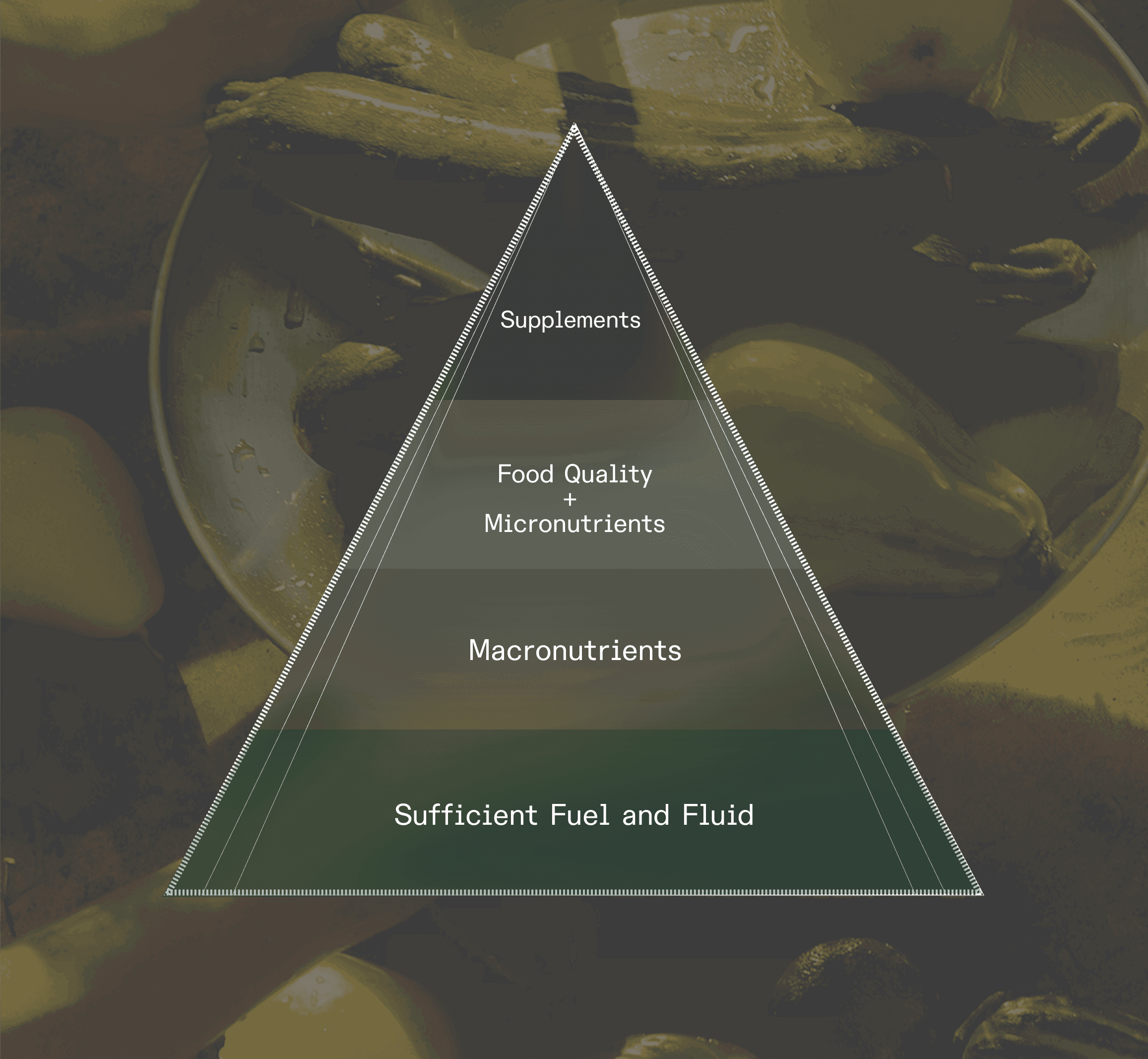
Nutrition is your fuel and building material.
It directly conditions your capacity to:
Transport oxygen efficiently
Stabilize your energy
Modulate inflammation
Recover and adapt
1. Eating ENOUGH
First mistake among amateur athletes: chronic undereating.
You train 6 to 12 hours per week, but you eat like someone sedentary. Your body perceives this gap as metabolic stress: your energy needs are high, but your intake doesn't keep up.
Direct consequences:
Metabolic stress (↑ cortisol)
Chronic inflammation
Depleted reserves
Poor recovery
Stagnant performance
Concrete action: Track what you eat for a few days, either using an app like MyFitnessPal, or by uploading photos of your meals into an AI companion that can analyze your intake. Then compare with your real needs: your basal metabolic rate (energy needed at rest) + your training expenditure. You'll likely be surprised by the gap.the gap.
When undereating becomes chronic, you can enter what's called RED-S (Relative Energy Deficiency in Sport) — a syndrome that particularly affects female athletes, endurance sports, and weight-category disciplines.
RED-S is a prolonged energy deficit that disrupts all your physiological systems:
Hormonal: decreased testosterone (men), amenorrhea or irregular cycles (women), thyroid dysfunction
Metabolic: bone mass loss, increased risk of stress fractures
Immune: recurring infections, poor wound healing
Cardiovascular: decreased resting heart rate (beyond normal adaptation)
Performance: chronic fatigue, stagnation, decreased strength and endurance
Warning signs: persistent fatigue despite rest, loss or absence of menstruation (women), recurrent injuries, declining performance, irritability, sleep disturbances.
If you recognize these symptoms, consult a healthcare professional specialized in sports medicine. RED-S requires comprehensive management: increased energy intake, temporary reduction in training load, medical monitoring.
2. Balancing macronutrients
You need all macronutrients to perform, recover, and adapt!
Protein (minimal daily intake 1.2–1.6 g/kg/day) is the building material: it enables muscle repair, hormone synthesis, and adaptation to training. Without sufficient intake, your body cannot rebuild after effort.
Carbohydrates are your preferential fuel for intense efforts. They allow you to store muscle glycogen and maintain intensity. Key strategy: concentrate them around your training sessions to optimize energy availability.
Lipids (20 to 35% of your total calories) are precursors to your hormones (testosterone, estrogen, cortisol) and play a central role in modulating inflammation. Focus on omega-3: fatty fish (salmon, mackerel, sardines) 2 to 3 times per week provide EPA and DHA, two fatty acids with powerful anti-inflammatory properties.
3. Meal timing
The strategy varies widely depending on individuals and sport type, but remember these principles:
Before training (2 to 3h before): eat a complete meal combining carbohydrates and protein. The goal is to arrive at the session with available fuel, without being in intense digestion phase.
After training: prioritize protein and carbohydrates to restart recovery, replenish muscle glycogen, and stimulate protein synthesis.
→ Don't train on empty (except as part of a specific, supervised strategy).
4. Food quality
Prioritize: varied, whole, living
Colorful vegetables (phytonutrients, antioxidants)
Quality animal proteins and small fatty fish (omega-3)
Seasonal fruits
Polyphenols (berries, green tea, turmeric, dark chocolate >70%)
Whole grains
Cold-pressed oils
Avoid: Ultra-processed foods, refined sugars, trans fats, alcohol
This dietary diversity directly supports: mineral and vitamin status, energy stability (stable blood sugar, metabolic flexibility), and inflammation management.
PILLAR 2: HYDRATION
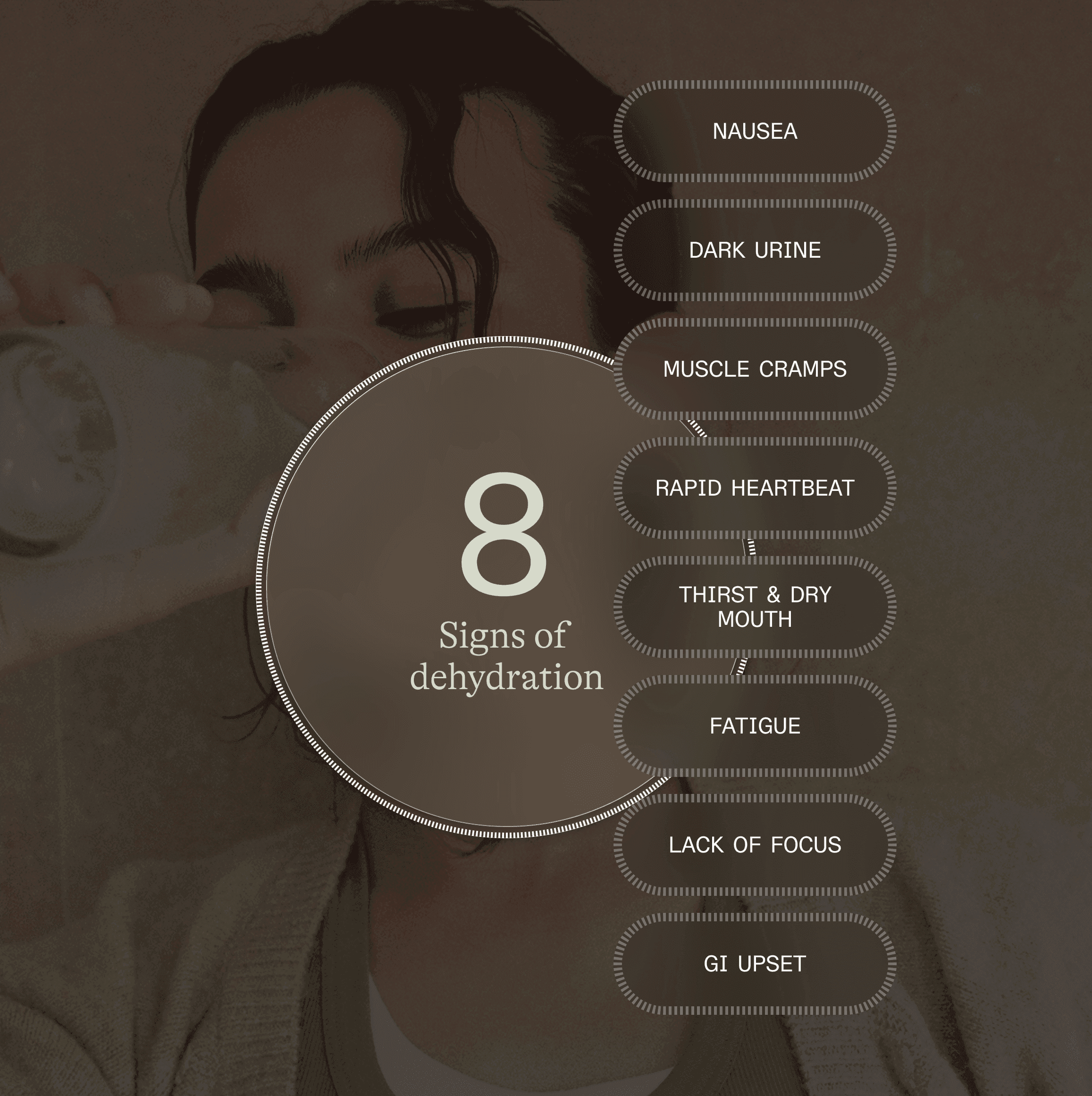
It conditions your blood circulation (and therefore oxygen transport), your thermoregulation, your aerobic capacity, and even your concentration during effort.
Here's how to optimize it:
Drink regularly throughout the day, not just during training. Your body needs constant hydration to function efficiently.
Monitor your urine color: pale yellow indicates you're well hydrated. The darker the color, the more you're in deficit.
Adapt your intake according to ambient temperature, effort intensity, and duration. Some athletes sweat much more than others: listen to your body.
General target: approximately 30–40 mL/kg/day, plus losses related to effort.
PILLAR 3: DEFICIENCIES, MEASURING YOUR TERRAIN
Beyond nutrition, many athletes have deficiencies because sport considerably increases the demand for micronutrients, to produce energy, repair tissues, regulate hormones, and support the nervous system.
Among the most common deficiencies, we notably find:
Iron, essential for oxygen transport
Vitamin D, supports muscle function and immunity
Magnesium, cofactor for ATP production and restorative sleep
Zinc, involved in tissue repair and testosterone production
Vitamins B9 and B12, crucial for energy production and nerve function
Iodine, which regulates thyroid function and therefore basal metabolism
A varied, quality diet doesn't always guarantee optimal status, especially for high-volume athletes or those with specific needs.
The effective strategy is simple: Measure → Correct → Monitor
PILLAR 4: BODY MAINTENANCE
Body maintenance encompasses everything that prevents injuries, optimizes movement quality, and supports your body daily.
It's often neglected among amateur athletes — yet it's decisive in your ability to train sustainably, without interruption.
1. Mobility
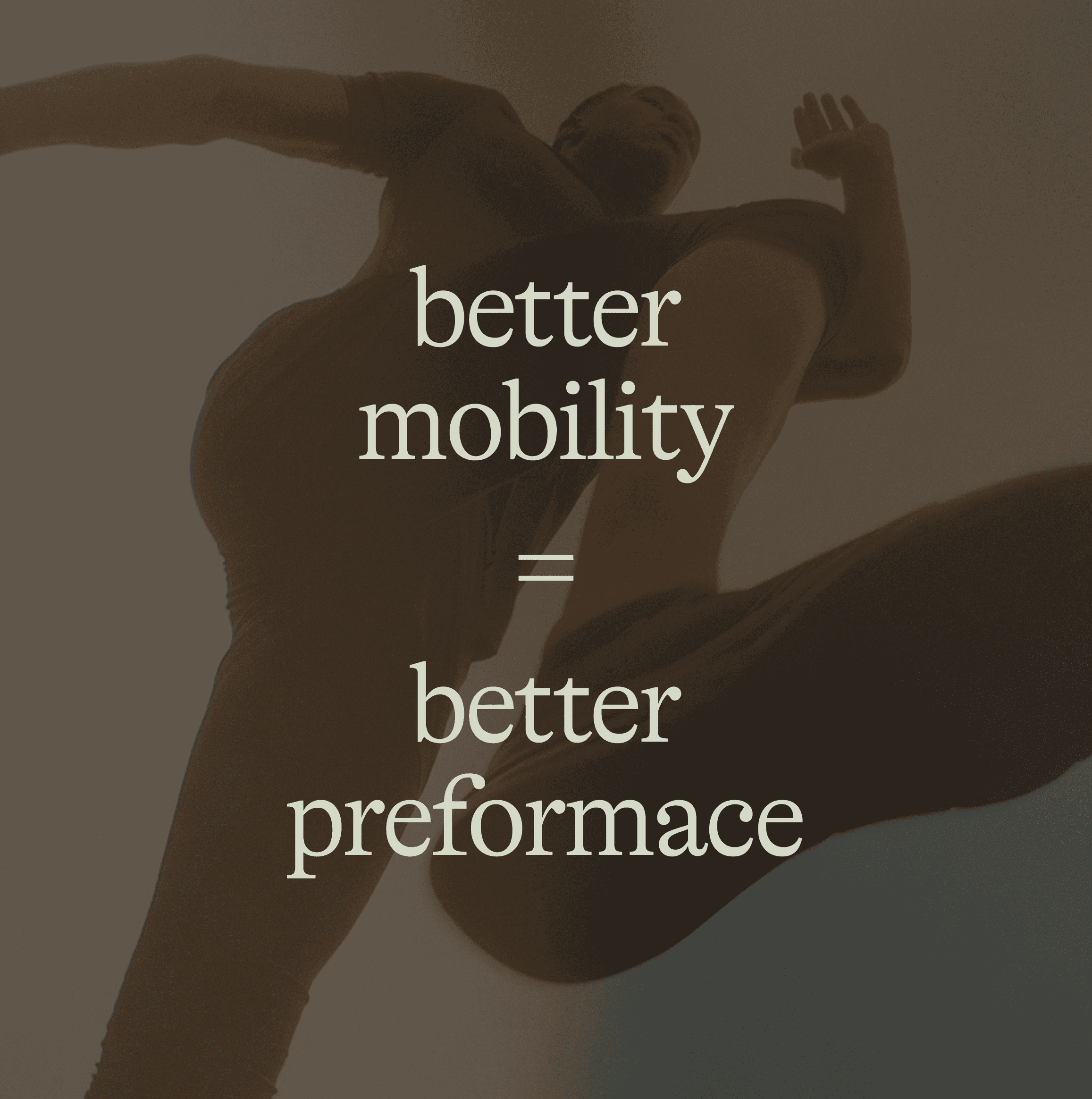
Mobility limitations create a domino effect: your body compensates, these compensations generate imbalances, and these imbalances eventually cause repetitive micro-traumatic injuries.
Regular mobility work allows you to:
Improve your joint range of motion
Reduce chronic muscle tension
Prevent injuries
Optimize movement quality
Result: you absorb training better, recover more efficiently, and progress sustainably.
Suggested frequency: 5 to 10 minutes per day, or 20 to 30 minutes 2 to 3 times per week. The important thing isn't duration, it's consistency.
2. Daily movement
Structured training and daily movement are not the same thing.
Outside your intense sessions, your body needs to move regularly at low intensity. Walking, light activities, active commuting improve blood circulation, reduce systemic inflammation, promote active recovery, and decrease cumulative stress.
These low-intensity movements lower sympathetic tone and support the body's shift toward parasympathetic dominance, the state associated with recovery and repair..
Remember, if you're plateauing, ask yourself the right question: what's limiting my capacity to absorb training?
Nutrition, hydration, micronutrients, body maintenance: these are actionable, measurable, and priority levers. You can objectify them, correct them, and track their evolution over time.
At Lucis, we help you objectify your biological terrain to build a strategy coherent with your sport, your level, and your daily life.
As you'll have understood, performance isn't built solely in your training sessions.
The information provided is for educational purposes only and does not replace medical advice.
REFERENCES
Beard, J. L., & Tobin, B. W. (2000). Iron status and exercise. The American Journal of Clinical Nutrition, 72(2 Suppl), 594S–597S. doi:10.1093/ajcn/72.2.594S.
Brownlie, T. IV, et al. (2004). Tissue iron deficiency without anemia impairs adaptation in endurance capacity after aerobic training in previously untrained women. The American Journal of Clinical Nutrition, 79(3), 437–443.
Calder, P. C. (2017). Omega-3 fatty acids and inflammatory processes: from molecules to man. Biochemical Society Transactions, 45(5), 1105–1115. doi:10.1042/BST20160474.
Kasapis, C., & Thompson, P. D. (2005). The effects of physical activity on serum C-reactive protein and inflammatory markers: a systematic review. Journal of the American College of Cardiology, 45(10), 1563–1569. doi:10.1016/j.jacc.2004.12.077.
McClung, J. P., & Murray-Kolb, L. E. (2013). Iron nutrition and premenopausal women: effects of poor iron status on physical and neuropsychological performance. Annual Review of Nutrition, 33, 271–288. doi:10.1146/annurev-nutr-071812-161205.
Maughan, R. J., & Shirreffs, S. M. (2010). Development of hydration strategies to optimize performance for athletes in high-intensity sports and in sports with repeated intense efforts. Scandinavian Journal of Medicine & Science in Sports, 20(Suppl 2), 59–69. doi:10.1111/j.1600-0838.2010.01191.x.
Mountjoy, M., et al. (2018). International Olympic Committee (IOC) consensus statement on relative energy deficiency in sport (RED-S): 2018 update. British Journal of Sports Medicine, 52(11), 687–697. doi:10.1136/bjsports-2018-099193.
Sawka, M. N., et al. (2007). American College of Sports Medicine position stand: Exercise and fluid replacement. Medicine & Science in Sports & Exercise, 39(2), 377–390. doi:10.1249/mss.0b013e31802ca597.
Thomas, D. T., Erdman, K. A., & Burke, L. M. (2016). Position of the Academy of Nutrition and Dietetics, Dietitians of Canada, and the American College of Sports Medicine: Nutrition and Athletic Performance. Journal of the Academy of Nutrition and Dietetics, 116(3), 501–528. doi:10.1016/j.jand.2015.12.006.
Request an AI summary of Lucis


